Meridian Lakes State College System

Fictional system. Real documentary.
The Single Application
One application. Every campus.
There are no wrong answers, because nothing on the form is checked against anything. No fee, no essay, no interview, and no you required.

Fictional system. Real documentary.
Financial aid
Aid disburses in your name.
We have elected not to look into it. The Single Application is accepted at all thirty-four campuses. Last fall it was accepted at a thirty-fifth, which had closed in 2020.
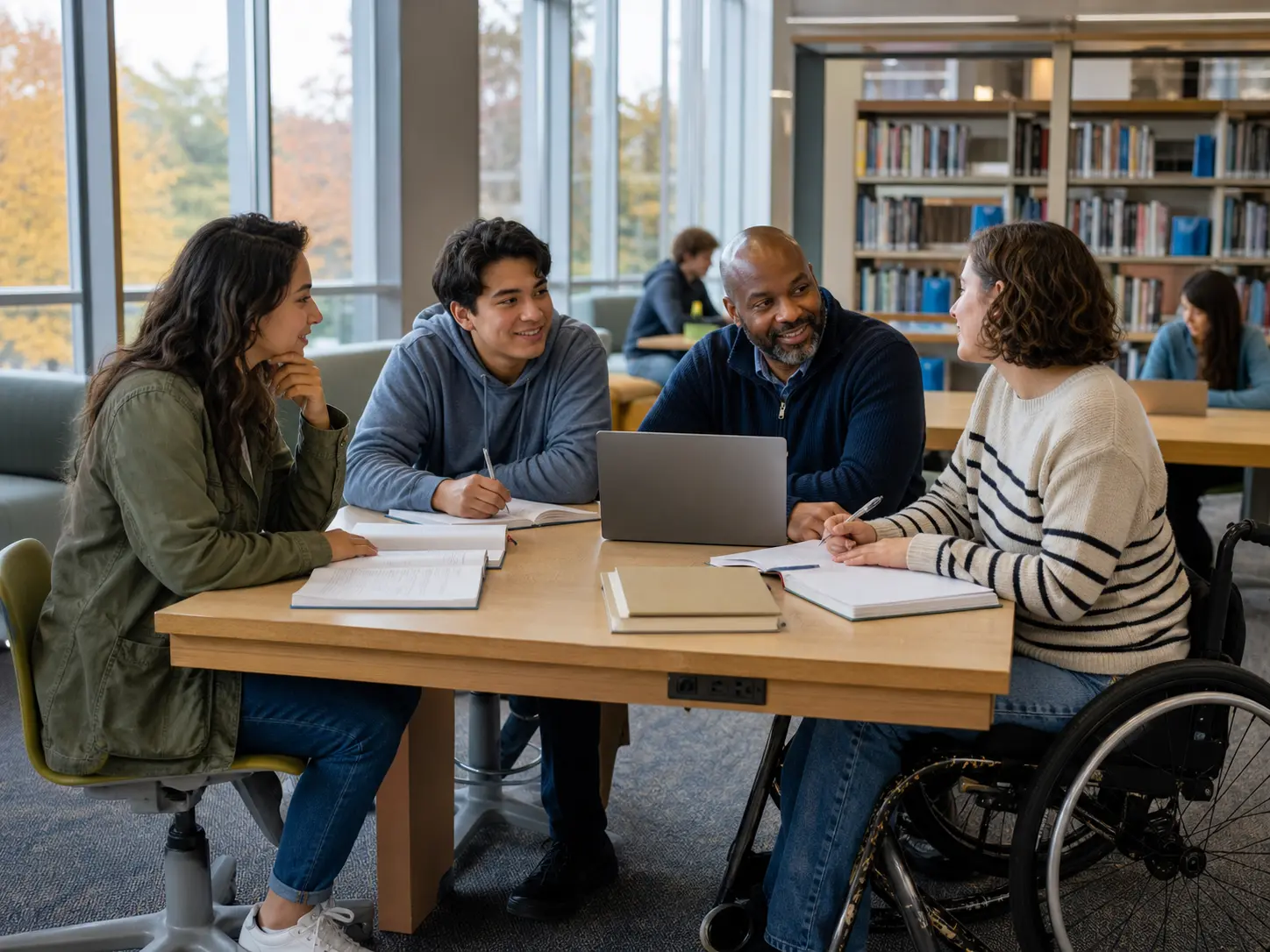
Fictional system. Real documentary.
New student orientation
Take a look around campus.
Tour our imaginary spaces, then follow the real fifteen-month timeline from application to discovery.
Slide 1 of 3: One application. Every campus.
Figures describe the system's incentives, not its intentions. The system has no intentions.
About the System
Thirty-four campuses. One intake.
Whoever you are, or aren't, we have already processed you. Choose a starting point, then follow the documented case record behind the system.
Coursework from closed institutions
Accepted whether the institution has closed, is closing, or has not opened. Institutional continuity is not required for record continuity.The national context →
Indexed by Social Security number
The name is a display preference. Where a person and their record disagree, the record governs.Why this exists →
Independent-student status is self-attested
So is dependent status. So, as it developed, was the student.Why this exists →
Resources for real people
Human services for humans. Personhood, here, is confirmed on arrival rather than on the form.Victim resources →
The System meets you where you are
Whoever you are, wherever you are, you can enroll at any Minnesota college and get aid today!
One application, forwarded across a statewide network of thirty-four institutions that share an intake layer and very little else. The form is trusted at every one of them, which is efficient right up until it isn't.
In keeping with the region's Scandinavian trust, verification was considered slightly impolite.
System-wide finding
You're automatically accepted.* Identity verification sold separately.
*"Accepted" means automatic acceptance: the documented application was processed without anyone checking it, after it paired someone else's Social Security number with a lookalike email, invented education history, and a false foster-youth claim. A federal student loan later followed in the victim's name. This is not a hypothetical admissions joke. It is exactly what happened to the victim.
A federal student loan was originated in the victim's name on January 27, 2025. No institution notified the real identity holder. The victim discovered it roughly fifteen months later through credit monitoring.
See exactly what happenedCase destination: why this exists, in my wordsThis documents one specific enrollment and remediation failure in the Minnesota State system. It is a reason to ask better questions before sharing sensitive information.
What this record does not claimIt does not allege a current data breach or claim that every applicant is affected.
Check source publication status · Case documentsDates to know
Systemwide calendar.
Attendance, throughout, is optional and cannot be confirmed.
Enrollment Verification Open House
Bring a photo ID, your questions, and—new this year—yourself.The documented timeline →Day of Verification
Attendance is not required and cannot be confirmed.The victim FAQ →Locate a Private Right of Action
Before the session ends. To date, none has been located.The policy analysis →Ask a better question
The questions an application form does not answer.
What happened at Normandale Community College?
A documented November 2024 application used a stolen Social Security number, a lookalike email address, false education history, and false biographical information. It was processed successfully, and a federal student loan was later originated in the victim's name. Read the sourced case timelineCan a credit freeze stop federal student loan identity theft?
Not for the Direct Subsidized or Unsubsidized loan type documented here, which generally does not use the consumer credit check a freeze blocks. Direct PLUS loans are different because they use a credit check. Read the sourced credit-freeze answerDoes this case prove every applicant's data is currently exposed?
No. This site documents one specific identity-theft case and the controls that failed in that case. It does not allege a current data breach or claim that every applicant is affected. Review the documented scopeWhat should I do if a student loan was opened in my name?
Start by pulling all three credit reports, freezing all three files, filing an FTC Identity Theft Report and police reports, and reviewing the federal student-loan record. The ordered playbook then covers FCRA blocks, the servicer and discharge process, OIG reporting, and written school engagement. Open the 12-step recovery playbook
The cost of not checking
Approval took one second. Reversal takes the rest of the year.
Approving the application took about a second. Undoing it takes roughly six months and a stack of paperwork: an FTC Identity Theft Report, police reports, servicer correspondence, and a discharge application reviewed by the U.S. Department of Education.
The public pays first: real state and federal money, disbursed in the name of a person who does not exist, then recovered slowly if at all. The victim pays longest, spending hundreds of hours proving to the school, the servicer, and the Department that they are the real person.
None of it was necessary. The system will spend six months proving the student was never real. It would not spend one second, at intake, confirming the applicant is a real person. That one check would have stopped the loan before it started.
What undoing it takesCase destination: why this site existsThe practical fix
Let people freeze federal student aid.
A credit freeze generally does not block Direct Subsidized or Unsubsidized Loans. Direct PLUS Loans are an important exception because they use a credit check. There is still no equivalent self-service federal student-aid freeze a person can place on their own SSN.